


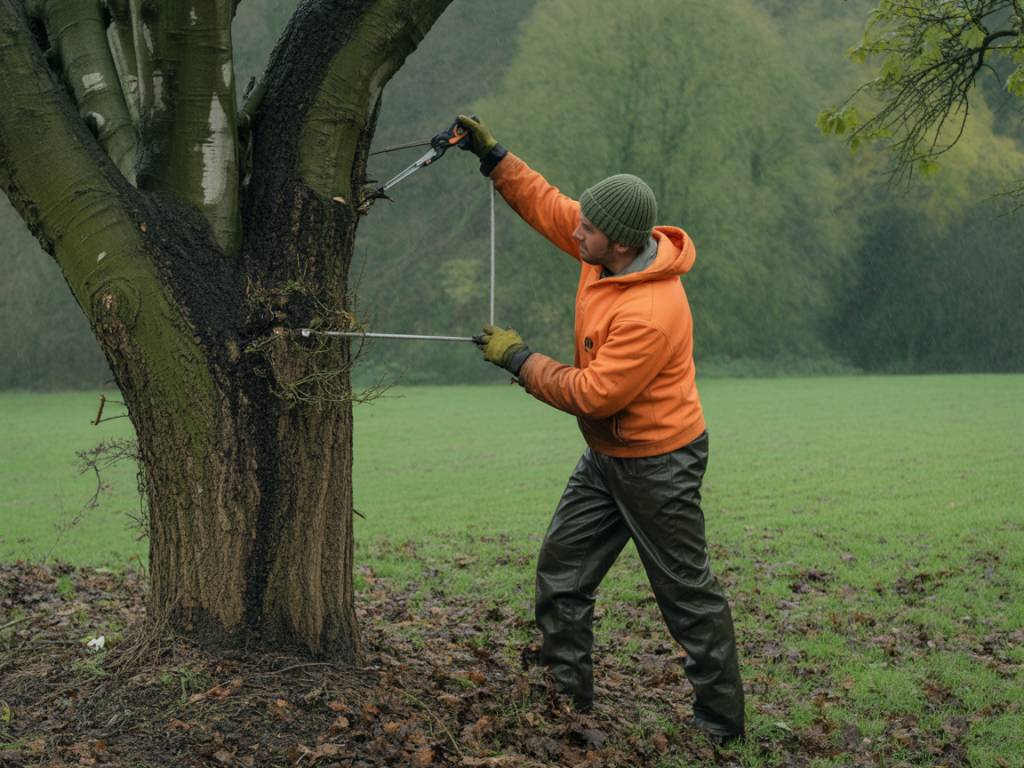
Some afternoons, when the rain has just stopped pattering on the shed roof, I take my secateurs for a wander around the garden. That quiet, silvery light we get so often in the UK has a way of revealing every crossing branch, every awkward spur and every little wound on my trees. Over the years, I’ve learned that in our damp, often blustery climate, good pruning isn’t just about neat shapes – it’s about keeping trees healthy, resilient and safe.
Let me share the tree pruning techniques I’ve come to trust here in my own soggy corner of Britain, in the hope that they’ll guide your hand as gently and confidently as they’ve guided mine.
Why pruning matters even more in a wet UK climate
Our gardens don’t just get showers; they get months of drizzle, driving rain and lingering humidity. Lovely for moss and ferns… less lovely for poorly pruned trees.
In a wet climate, pruning helps to:
- Improve airflow through the canopy so leaves dry faster and fungal diseases have less chance to spread.
- Let in more light to the interior of the tree, reducing damp, shaded pockets where problems brew.
- Remove weak or diseased wood that can quickly become a gateway for rot in moist conditions.
- Reduce wind resistance, helping your trees withstand winter storms more safely.
When I skip pruning for a year, I can feel the difference: branches stay wet longer, lichen and canker spread more easily, and fruit trees in particular start to sulk. A few careful cuts at the right time can change all that.
Timing your pruning with the British seasons
In the UK, timing is everything. Our seasons are gentle but unpredictable, so rather than strict dates, I work with “windows” and what the tree itself is telling me.
Late winter (February–early March) is my main pruning season for most deciduous trees:
- The leaves are off, so the structure is easy to see.
- The tree is dormant, so there’s less stress and bleeding of sap.
- Disease spores are generally at lower activity compared to warm, wet summer.
There are exceptions:
- Stone fruits (plum, cherry, apricot) are safer pruned in summer (July–August) to reduce the risk of silver leaf disease, which loves cool, wet weather and open wounds.
- Evergreens (holly, laurel, yew, conifers) I usually tidy in late spring to mid-summer, once new growth has flushed and the worst frosts are past.
- Magnolias, birches, acers often “bleed” if cut in late winter, so I prefer mid-summer light pruning if needed.
If you remember one seasonal rule, let it be this: avoid heavy pruning in late autumn. Wounds can sit open and slow to seal just as months of wet and cold arrive, giving fungi an all-inclusive winter holiday.
The golden rules of healthy pruning cuts
Before we talk about shaping and techniques, it’s worth pausing on what a good cut looks like. This is where most of the long-term health is won or lost.
1. Always cut to a purpose
Every snip should answer a question: Am I removing dead wood? Thinning? Reducing height? Clearing a path? If you can’t answer, step back and look again. In a wet climate, random “tidying” can create more wounds than benefits.
2. Cut just outside the branch collar
The branch collar is that slightly swollen ring where a branch meets the trunk or a larger branch. That’s the tree’s healing machinery. Cut just outside it – without leaving a big stub and without slicing into it – and the tree can seal the wound much more effectively.
3. Use the three-cut method for larger branches
In wet, windy weather, large tears in bark invite trouble. To avoid this, I use three cuts:
- First, an undercut 20–30 cm out from the trunk, about a third of the way through.
- Second, a cut from the top, a little further out, until the branch falls. The undercut stops it ripping down the trunk.
- Finally, a neat cut just outside the branch collar to finish.
4. Keep tools clean and sharp
In a damp climate, fungi and bacteria spread eagerly from one wound to the next. I wipe my blades with methylated spirits or a disinfectant between trees, and always after dealing with anything suspicious (canker, dieback, odd staining).
Sharp tools make smooth cuts that shed water and heal faster. Dull blades crush tissue, leaving ragged wounds that hold moisture – exactly what we don’t want.
Formative pruning: setting young trees up for a strong life
There’s something deeply satisfying about standing under a mature tree you’ve shaped since its first years. Those early decisions stay with a tree for life.
In a wet UK garden, formative pruning aims for a structure that:
- Lets plenty of air and light through the canopy.
- Is strong against wind and snow.
- Keeps the main framework high enough for paths, lawns or seating beneath.
When my young trees are settling in (years 1–5), I usually:
- Choose a clear leader (one main upright stem) for most ornamental and shade trees, and remove competing leaders while they’re still small and easy to heal.
- Space main branches vertically along the trunk so they’re not all emerging from the same point, which creates weak junctions.
- Remove any crossing or rubbing branches before they grow thick enough to wound each other.
- Lift the canopy gradually by removing the lowest branches over time, especially where I want to walk or mow underneath.
I try not to remove more than about a quarter of the live crown in any one year. In our climate, a tree needs plenty of leaf area to recover from pruning, especially after a wet, sun-starved season.
Crown thinning: my favourite technique for soggy gardens
If there is one technique that has made the biggest difference in my own garden, it’s gentle crown thinning. Rather than shearing a tree into a uniform ball (tempting, but unkind), crown thinning removes select branches from within the canopy to open it up.
Thinning is particularly useful in a wet UK climate because it:
- Allows air to move more freely, drying leaves faster after rain.
- Lets dappled light reach the ground for underplanting.
- Reduces the “sail” effect in windy storms.
When I thin a crown, I:
- Step back and study the overall shape first, looking for congested areas where lots of branches arise from the same spot.
- Remove entire small branches back to their origin, rather than shortening everything. This keeps the tree looking natural.
- Focus on crossing, inward-growing and very crowded shoots.
- Avoid taking out too much from one side or level, which can unbalance the tree in strong winds.
Most of the time, this is a subtle operation – a few thoughtful cuts rather than a drastic haircut. When I walk back across the lawn, I want the tree to look as though it has simply exhaled.
Crown lifting: making space without harming the tree
On damp mornings, low branches stay wet for hours as they brush against grass and shrubs. They make mowing awkward, pathways dark and patios feel smaller than they are. That’s when crown lifting comes in.
Crown lifting means removing lower branches or parts of branches to raise the canopy and create headroom. Done well, it can:
- Improve airflow beneath the tree, helping lawns and shade plants dry out.
- Let more light into windows and across seating areas.
- Reduce fungal problems where foliage constantly grazes damp ground.
I lift a crown gradually over several seasons, especially on young trees. Removing too many lower branches at once can starve the trunk of protection and push all growth to the top, making it top-heavy and vulnerable in wind.
An easy rule I follow: try to keep at least half the tree’s total height still clothed in foliage from the top down. So a 6-metre tree will ideally have live branches on at least the upper 3 metres.
When and how I reduce height or spread
Sometimes, despite our best planning, a tree simply grows too tall or wide for its space or blocks too much winter light into the house. The instinct might be to “top” it straight across, but in our damp climate that can create a crown full of weak, fast-growing, disease-prone shoots.
Instead, I favour crown reduction using a technique called “cutting to a lateral”:
- Rather than cutting a branch back to a random stump, I cut it back to a smaller side branch that’s at least one-third the diameter of the branch being removed.
- This side branch becomes the new leader, and the tree keeps a more natural outline with fewer vulnerable stubs.
- I take care not to remove more than about 20–30% of the canopy in a single season.
In our wet climate, where decay can travel quickly through large wounds, I’m especially cautious with big reductions. Sometimes it’s kinder – and safer – to seek advice from a professional arborist, particularly for very large or compromised trees.
Special care for fruit trees in a rainy garden
Fruit trees reward good pruning almost immediately, but they’re also more vulnerable to fungal diseases when the weather is persistently wet.
For apples and pears, winter is my formative and structural pruning time, but I pay attention to:
- Removing crowded spurs where fruits might rub against each other and stay damp.
- Opening the centre of the tree to a pleasing “goblet” shape so sunlight and air can reach every branch.
- Cutting out any cankered or scabby wood well back into clean, healthy tissue and disinfecting tools afterwards.
For plums and cherries, the rules are different in our climate. To reduce silver leaf and other fungal problems, I:
- Prune only in dry summer spells, ideally a run of several dry days.
- Keep cuts as small as possible, avoiding large branches unless they’re dead or dangerous.
- Remove gummy, dead or diseased growth promptly and burn or bin it rather than composting.
After wet springs, I often find little pockets of dieback on the tips of fruiting branches. A quick tidy on a dry day can prevent that from creeping further into the tree.
Caring for pruning wounds in a damp climate
It’s tempting to reach for wound paints and sealants in a rainy country, but modern arboricultural advice is generally clear: healthy trees are better at sealing their own wounds than we are at sealing them for them.
Instead of painting, I focus on:
- Making clean, correctly placed cuts so the tree’s own barriers can form around the wound.
- Pruning in dry weather whenever possible, to give wounds time to start sealing before they’re soaked.
- Keeping the area around the base of the tree clear of dense, damp mulch piled against the trunk, which can encourage rot.
There are a few exceptions where a specialist product may be recommended (for example, on some fruit diseases), but those are the exception, not the rule. For most garden trees, good technique and timing are the real guardians.
Reading the tree: small signs that guide your hand
Over time, you’ll find your pruning decisions become less about rules in a book and more about quietly reading the tree in front of you. Even in the grey drizzle, trees are constantly telling us how they’re coping.
When I’m deciding where (or whether) to cut, I look for:
- Dieback at the tips – often a sign of stress or disease; I prune back to a healthy bud or branch junction.
- Water shoots (vigorous upright shoots) – especially after past over-pruning; I thin these carefully to avoid a dense, humid thicket.
- Cankers or sunken, cracked patches – these often need to be pruned out well into healthy wood.
- Persistent wetness on certain branches, with algae or lichen buildup – a clue that airflow is poor and thinning is needed.
On still, misty days, you can sometimes see exactly which parts of the tree stay wet the longest. Those are the places I return to with my secateurs when the weather turns dry.
When to call in a professional
Some of the most important decisions in a wet, windy country are about safety. If you find yourself worrying about a tree leaning over a neighbour’s house, a road, or your favourite bench, it’s time to bring in a qualified arborist.
Professional help is particularly important when:
- The tree is very large or close to buildings or power lines.
- There are signs of internal decay (mushrooms at the base, large cavities, hollow sounds when tapped).
- Storm damage has left heavy, hanging or split branches.
- You’re unsure how much can safely be removed without destabilising the tree.
I like to think of arborists as the surgeons of the tree world – there’s both science and art behind what they do. Watching a good one work can teach you more than any book.
Back in my own garden, though, most days it’s just me, a pair of well-loved secateurs and the gentle sound of rain on leaves. With each careful cut, the trees respond: a little more light, a little less damp, a canopy that breathes easier in our ever-changeable weather. And in time, those quiet winter afternoons spent pruning become a gift that echoes through every lush, green, rain-washed summer.