Why Autumn Mulching Matters More Than You Think
As soon as the first chill arrives here in the UK, I start to think less about planting and more about protecting. Autumn is when I do some of my most important work for the year ahead, and mulching is right at the heart of it. Done well, autumn mulching will protect your soil from winter weather, feed it slowly, cut down your fertiliser bill next spring, and save you a lot of time weeding.
I garden as naturally as possible, with a lot of inspiration from permaculture. That means I try to see mulch as a living blanket rather than just something to make beds look tidy. The goal is to keep the soil covered, nourished and alive, while letting nature do most of the heavy lifting for me.
What Mulching Really Does for Your Soil
When I first started gardening, I thought mulching was mostly about weed control. It certainly helps with that, but the real magic happens underneath the surface. A well-chosen autumn mulch:
- Shields the soil from heavy winter rain that can compact and erode it
- Helps keep soil organisms (worms, fungi, microbes) active for longer into the cold months
- Reduces nutrient leaching, so precious nitrogen and other elements don’t wash away
- Breaks down over winter to create a slow-release fertiliser right where plants need it
- Prepares beds so spring planting becomes far easier and less disruptive
That last point is crucial. If the soil is well covered and fed over autumn and winter, I find I need far less bought-in fertiliser in spring. Often I can rely mostly on compost, mulches and the work of soil life to feed my plants.
Choosing the Right Mulch for UK Gardens
Different mulches behave differently in our often damp, mild climate. I choose materials based on the bed, the plants and how quickly I want the mulch to break down.
Leaf mould and fallen leaves
Autumn leaves are one of the best gifts the season gives us. In my own garden I treat them as a free, locally produced soil conditioner.
- Shredded leaves break down faster and make a softer surface for sowing and planting in spring.
- Whole leaves work well around shrubs, trees and perennials where I don’t need a fine seedbed.
- Oak, beech and hornbeam leaves make particularly lovely leaf mould over time.
If you have enough space, pile spare leaves into a corner or a simple wire cage and let them break down for a year or two. The resulting leaf mould is one of the best soil improvers I know and greatly reduces the need for fertilisers and peat-based composts.
Homemade compost
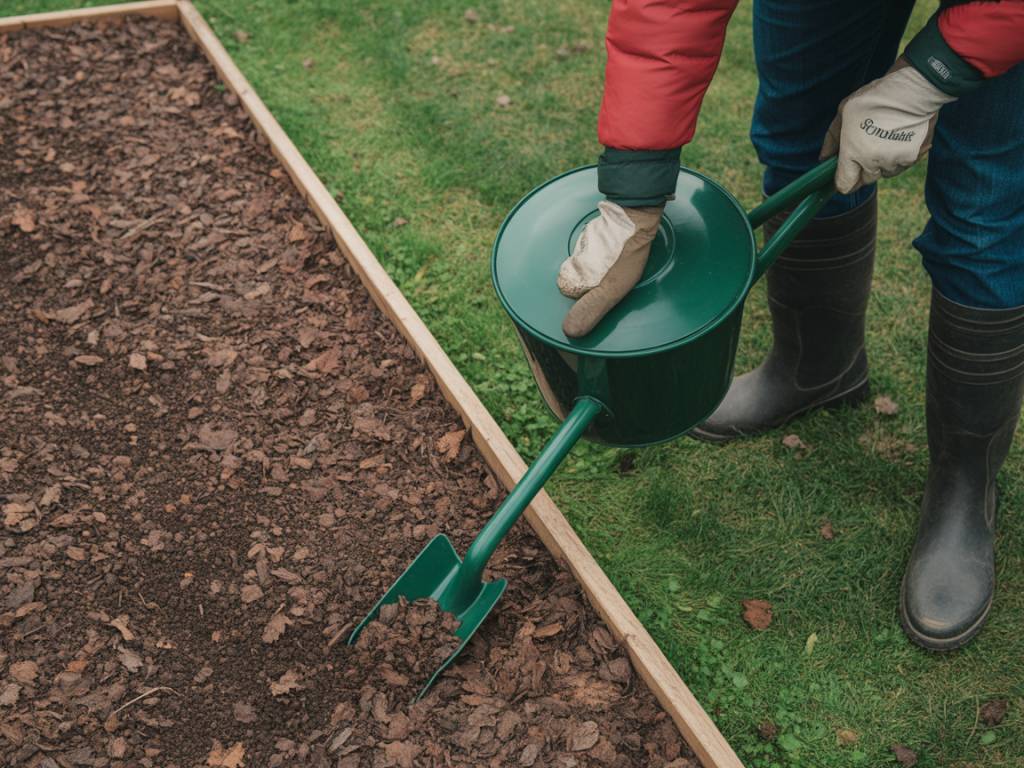
If I’ve managed my compost heaps well, autumn is when I’ll have a batch ready to spread. I use compost as a nutritious mulch, especially on vegetable beds that will be planted early in spring.
- Spread 2–5 cm of compost over the surface; there’s no need to dig it in.
- Worms and other organisms will gradually pull it down into the soil profile.
- This top dressing feeds the soil slowly, so I avoid heavy fertiliser applications later on.
If your compost isn’t entirely broken down, that’s usually fine for mulching around established plants. Just avoid very woody or still-hot compost around delicate seedlings.
Straw and hay
Straw can be a very effective protective mulch for winter, especially on vegetable beds that you’re resting or green manuring.
- Straw has good insulating properties and protects soil from heavy rain.
- It tends to be lower in nutrients, so I often combine it with compost or well-rotted manure underneath.
- Hay is richer but can introduce more weed seeds; I use it cautiously and only when I know the source.
Wood chips and bark
I use woody mulches more around paths, fruit bushes and ornamental beds rather than in the main veg plot.
- Coarse wood chips are excellent for paths and around established shrubs and trees.
- I avoid digging wood chips into the soil; they’re best kept on the surface to avoid tying up nitrogen.
- Over time, a woody mulch encourages fungal networks, which are wonderful allies for many perennial plants.
How Thick Should an Autumn Mulch Be?
The depth of mulch you choose makes a huge difference. Too thin, and it won’t protect the soil or suppress weeds well. Too thick, and you may risk creating a damp, slug-friendly blanket over tender plants.
- For bare veg beds resting over winter: 5–8 cm of organic mulch (compost, leaves, straw).
- Around shrubs, trees and perennials: 5–10 cm, keeping a small gap around stems and trunks.
- For paths: 5–10 cm of wood chips or bark to suppress weeds and keep things mud-free.
In the milder parts of the UK, you can be a bit more generous without worrying too much. In colder, wetter areas, I’m slightly lighter with mulches over delicate crowns to avoid rotting and instead focus thicker mulches on the spaces between plants.
Timing Mulch Applications in the UK Climate
In my garden, I usually spread most of my autumn mulch between late September and early November, depending on the year and the weather. I aim for a moment when:
- The soil is still warm from summer, so life in the soil is active.
- The surface is moist but not waterlogged, so the mulch settles well.
- Most of the heavy harvesting is done, especially in the veg beds.
Spreading mulch while the soil is warm encourages faster breakdown and gives beneficial organisms a good boost before winter really sets in. If you mulch very late in the season, the benefits still appear, but the transformation into rich, fertile topsoil will be slower.
Mulching to Reduce Fertiliser Use
One of my quiet goals every year is to rely less and less on bought fertilisers. Mulching is central to that.
Organic mulches act like a slow-release feed. As they decompose, they release nutrients in a steady, gentle way. Rather than giving plants a sudden dose of nitrogen or potash, they supply a constant trickle that’s easier for the soil ecosystem to handle and less likely to wash away.
Here are some ways I use mulching to cut down on fertiliser:
- Compost first, targeted feeds later: I start with a generous compost mulch in autumn, then only use liquid feeds for hungry crops (like tomatoes or squashes) if they really show they need it.
- Leaf mould as a conditioner: Leaf mould doesn’t contain huge amounts of nutrients, but it dramatically improves soil structure and water-holding capacity, which helps plants make better use of what’s already in the soil.
- Green manures plus mulches: In some beds I grow green manures (like field beans, grazing rye or phacelia) and then cut them down and leave them as a surface mulch. They feed the soil while also protecting it.
Over a few seasons of steady mulching, I’ve seen my soil become darker, richer and more crumbly. Once you get to that stage, plants are far more resilient and often need only minimal extra feeding.
Avoiding Common Mulching Mistakes
Mulching is simple, but there are a few pitfalls I’ve learned to avoid.
- Mulch on wet, compacted soil: I try not to trap waterlogged, squashed soil under a thick blanket. If the ground is very compacted, I use a garden fork to gently lift and aerate before mulching.
- Mulch right up to stems and trunks: Piling mulch against woody stems can encourage rot and pests. I leave a few centimetres clear around the base of plants and trunks.
- Using contaminated materials: I’m careful with manures, grass clippings or hay that may contain herbicide residues. They can linger and seriously harm sensitive crops like beans or potatoes. If I’m unsure, I test on a small patch first.
- Too much fresh, high-nitrogen material: A very thick mulch of fresh grass clippings can go slimy and smelly. I mix fresh materials with drier, browner things like leaves or straw, or I compost them first.
Working with Nature, Not Against It
When I look at a healthy woodland floor in autumn, I see nature’s own mulching system at work: a constant, gentle fall of organic matter that protects the soil, feeds it and supports an enormous amount of life. In my garden I’m always trying to copy that pattern in a way that fits a small, productive space.
Smart autumn mulching isn’t about perfection or expensive materials. It’s about using what you have locally—leaves, compost, straw, wood chips—and laying it down with an understanding of what your soil and plants truly need. Once you start to notice how much less bare earth you leave exposed, how much easier the soil is to work in spring, and how healthy your plants look with minimal feeding, it becomes a very satisfying habit.
If you’re just starting, pick one bed this autumn and mulch it really well. Watch how it behaves over winter and into spring. Notice how the soil looks and feels, and how the plants respond. Your garden will quietly teach you what works best in your particular corner of the UK.
Happy mulching,
Samanta