


Understanding Drought in a Traditionally Damp Country
I garden in a country famous for drizzle and grey skies, yet my summer soil often cracks like old pottery. In recent years, the UK has seen longer dry spells, hosepipe bans, and scorching heatwaves that leave lawns scorched and beds gasping. Instead of fighting this, I’ve shifted my whole way of gardening to work with the weather, not against it.
My approach is rooted in natural, low-input methods inspired by permaculture: protect the soil, slow water down, grow tougher plants, and design the garden so it needs less intervention from me. I still enjoy lush borders, tasty veg, and happy wildlife, but I think of water as a precious resource, not an endless tap.
Start with the Soil: Your Living Water-Storage System
If I had to choose just one drought strategy, it would be this: build better soil. Healthy soil acts like a sponge, holding onto moisture when it’s available and slowly releasing it to plant roots during dry spells.
Here’s how I make my soil more drought-resilient:
- Add organic matter regularly. I spread homemade compost, well-rotted manure, or leaf mould over my beds each year. I don’t dig it in; the worms and soil life do that for me.
- Avoid bare soil. Bare soil bakes in the sun and loses moisture quickly. I keep it covered with plants or mulch as much as possible.
- Minimise digging. I garden mostly “no-dig”. Disturbing soil structure can reduce its ability to hold water and harms the tiny channels created by roots and worms.
- Improve drainage where needed. Ironically, areas that get waterlogged in winter often dry out to concrete in summer. Organic matter improves both drainage and moisture retention.
Over a few seasons, I’ve noticed my beds stay moist deeper down, even after weeks of dry weather. It’s a quiet, long-term investment that pays off every single summer.
Mulching: The Easiest Way to Cut Water Use
Mulching is one of my favourite summer rituals. A good mulch acts like a shade cloth for the soil, reducing evaporation, stopping crusting, and keeping roots cooler on scorching days.
Materials I use in my UK garden include:
- Homemade compost – my go-to for most beds.
- Leaf mould – especially around woodland plants and shade borders.
- Straw or hay (unsprayed) – around veg, fruit bushes, and potatoes.
- Grass clippings (thin layers) – allowed to dry a little first to avoid matting.
- Shredded prunings or bark chips – great for paths, fruit trees, and around shrubs.
In late spring or early summer, I water deeply, then spread mulch 5–8 cm thick around plants, keeping a small gap around stems to avoid rot. This single action drastically reduces how often I need to water during a hot spell.
Choosing Plants That Laugh at Dry Spells
I’ve stopped trying to grow thirsty divas in the hottest, driest corners of my garden. Instead, I group plants by their water needs and choose varieties suited to our increasingly erratic summers.
Plants that cope well with dry UK summers often have:
- Silvery, hairy, or small leaves
- Deep or extensive root systems
- Aromatic foliage (common in Mediterranean herbs)
Some of my favourite drought-tolerant choices:
- Herbs: rosemary, thyme, oregano, sage, marjoram, lavender.
- Perennials: echinacea, sedum (Hylotelephium), verbena bonariensis, gaura, yarrow (Achillea), Russian sage (Perovskia), hardy geraniums.
- Shrubs: buddleia, cistus, santolina, hebes, some roses (especially species and rugosa types).
- Grasses: Stipa tenuissima, miscanthus, panicum, deschampsia.
I still grow some thirstier plants, but I keep them close to the house or near water sources, where I can give them extra attention without trudging across the whole garden with a watering can.
Permaculture-Inspired Garden Design for Dry Summers
When I plan new beds or tweak existing ones, I think about water flow across the whole space. The aim is to slow water down, spread it out, and sink it into the soil rather than letting it rush away.
A few design ideas that work well in the UK:
- Swales and gentle dips. On a slope, I create shallow, level ditches or contour beds that catch rainfall and allow it to soak in.
- Planting “thirsty” beds in lower areas. Naturally damp spots are perfect for more demanding plants, saving me effort.
- Mixed layers of plants. Taller plants can shelter the soil and underplanting beneath, reducing evaporation.
- Windbreaks. Hedges or mixed shrub borders slow down drying winds. Even a loose, wildlife-friendly hedge makes a difference.
By observing how water behaves in my garden during heavy rain, I spot opportunities to improve things for the next dry spell.
Smarter Watering: Doing More with Less
I try to water like a deep, infrequent storm rather than a daily drizzle. This encourages roots to grow downwards, making plants more self-reliant.
My main watering habits in dry UK summers:
- Water early morning or late evening. Less water is lost to evaporation, and plants cope better with heat later in the day.
- Water the soil, not the leaves. I aim for the base of each plant, avoiding overhead watering where possible.
- Water deeply but less often. A thorough soak once or twice a week is usually better than a light sprinkle every day.
- Prioritise vulnerable plants. New plantings, containers, veg crops, and anything in very free-draining soil get first priority.
- Use watering cans when I can. This helps me be more deliberate and targeted than using a sprinkler.
I also keep an eye on the weather forecast. If rain is due, I let nature do the work rather than watering “just in case”.
Harvesting Rain: Making the Most of Every Drop
In a climate like ours, it’s madness not to catch the rain that does fall. I see every hard surface as an opportunity to harvest water.
Here’s how I collect and store water in my own space:
- Water butts on every downpipe. I connect several butts together from the house roof and the shed, so they fill and drain as one big system.
- Using larger containers where space allows. An old, cleaned food-grade barrel can store a surprising amount of water.
- Directing overflow to planting areas. When butts are full, I divert excess water to a rain garden or a mulched bed.
- Mulched gravel or permeable paths. Instead of hard paving that sends water to the drains, I use surfaces that let water soak into the soil.
Rainwater is softer and often kinder to plants than tap water, especially in hard-water areas, and it feels satisfying to use what the sky gives for free.
Rethinking Lawns and High-Thirst Areas
Lawns are one of the thirstiest features in many UK gardens. I’ve gradually reduced mine and turned sections into mixed borders, mini-meadows, and productive beds that need far less watering.
For the lawn that remains, I treat it more gently:
- Letting it go brown in summer. Grass is tougher than it looks and usually greens up again with autumn rain.
- Raising the mower blades. Longer grass shades its own roots and soil, reducing evaporation.
- Leaving clippings in place sometimes. This adds a light mulch and feeds the soil beneath.
I also avoid watering the lawn just for appearances. I’d rather save that water for fruit, veg, and favourite perennials.
Containers and Raised Beds in a Dry Summer
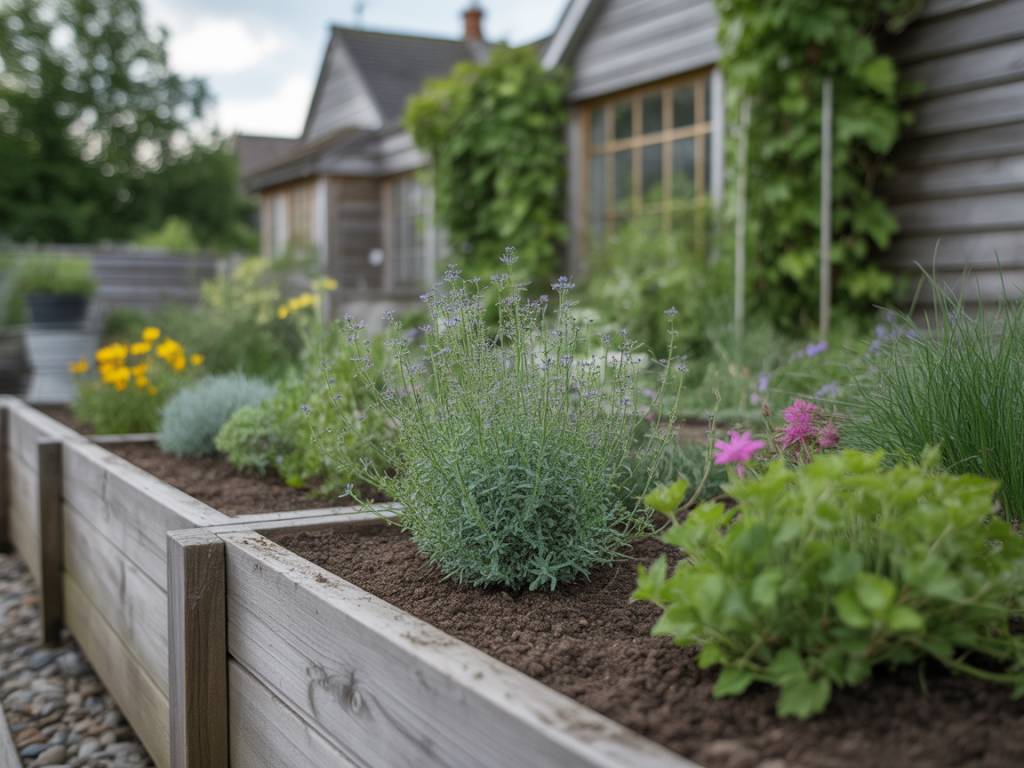
Pots and raised beds dry out much faster than ground-level soil, especially in full sun or windy spots. Instead of giving them up, I adjust how and what I plant in them.
My container and raised-bed tactics:
- Use larger pots where possible. The more compost, the more moisture they can hold.
- Mix in water-retentive organic matter. Compost, coir, and leaf mould help hold moisture better than soil alone.
- Group pots together. They shade each other’s sides and create a slightly more humid microclimate.
- Stand pots in shallow trays during heatwaves. This gives plants a little reservoir, but I empty the trays in cooler, wetter periods.
- Choose tougher plants for the sunniest containers. Mediterranean herbs, succulents, and drought-tolerant perennials are ideal.
Observing, Adapting, and Working with the Weather
Every summer teaches me something new. I notice which plants sail through drought, which beds dry first, and which mulches perform best. I keep a few simple notes so I can tweak my planting and layout each year.
For me, drought-resilient gardening in the UK isn’t about giving up on beauty or abundance. It’s about designing a garden that can look after itself better, wasting less water, and accepting that brown patches and crispy edges are part of a living, changing landscape.
When I walk around on a hot July evening, watering can in hand, hearing the soft glug from a rain-filled butt and seeing mulched beds holding onto their precious moisture, I feel I’m doing right by both my plants and the wider environment.
If you start with your soil, protect it with mulch, choose resilient plants, and harvest every drop you can, your garden can not only survive the next dry spell, but quietly thrive through it.
Samanta