


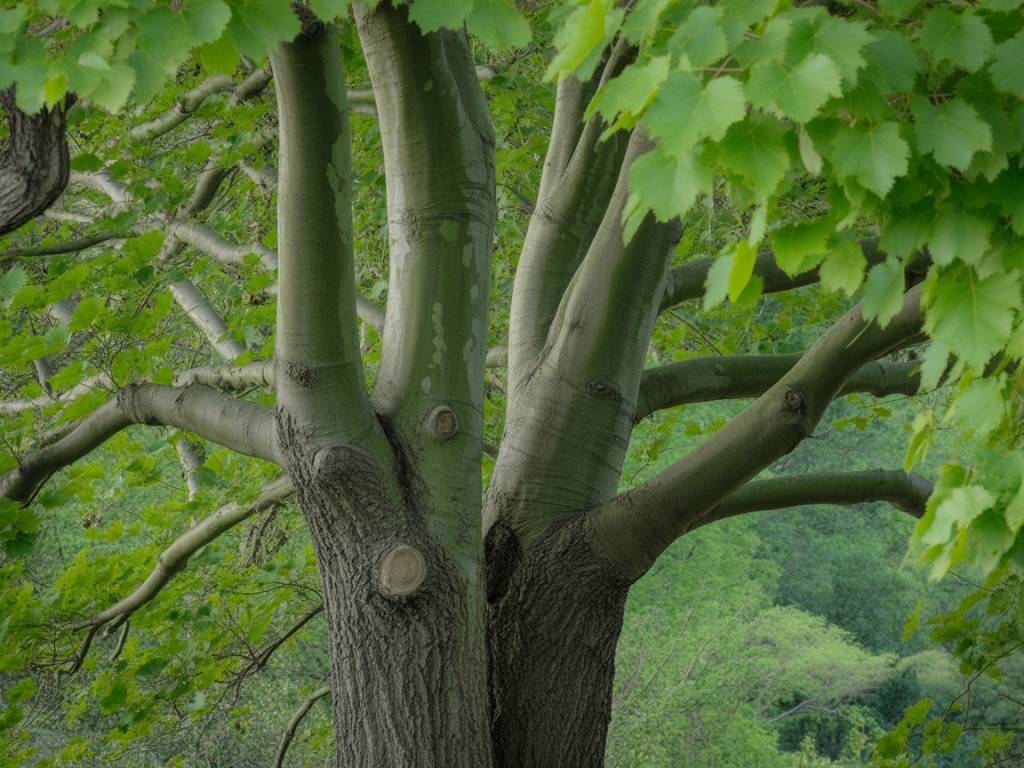
Sycamore trees in the UK: are they protected?
Sycamores are a familiar presence in so many British gardens – generous, leafy, sometimes a little bossy with their shade and seedlings. If you’re wondering whether you can prune or remove a sycamore in your garden, the first thing to know is this: the law doesn’t care about the species as much as the situation.
In most of the UK, sycamore trees are not automatically protected just because they’re sycamores. What matters is whether:
- There is a Tree Preservation Order (TPO) on the tree, or
- Your property lies in a Conservation Area, or
- Your work would involve felling more than a certain volume of timber, which might require a felling licence, or
- The work would disturb nesting birds or bats, which are protected by wildlife legislation.
So, you can’t simply look at a sycamore and know if it’s “protected”. You have to do a little gentle detective work before you even think of picking up the saw.
Tree Preservation Orders: the quiet shield around your tree
A Tree Preservation Order is a legal protection made by the local planning authority (usually your council) to safeguard trees that bring significant amenity value to an area. A TPO can apply to:
- A single tree
- A group of trees
- Woodlands
- Areas marked on a map
Sycamores are often included in TPOs, especially if they are:
- Large, prominent from the street, or part of a historic setting
- Forming a striking line or avenue
- Contributing to local character or wildlife value
If a sycamore is covered by a TPO, you usually must not:
- Cut down (fell) the tree
- Top, lop, prune, uproot or wilfully damage it
…without written permission from the council. Doing so can lead to significant fines, and you may also be required to plant a replacement tree.
How to check if your sycamore has a TPO
Thankfully, you don’t need to guess. Here’s how to find out if your tree is protected.
- Check your council’s website – many local authorities have online maps where you can search Tree Preservation Orders and Conservation Areas by postcode or address.
- Contact the planning or tree officer – if the online information is unclear, a quick email or call to the planning department can confirm if your tree is covered.
- Look at your property documents – sometimes TPO information appears in searches done when you bought the property, though these can be out of date.
Don’t rely on hearsay from neighbours – TPOs are precise legal tools, and their boundaries can be surprisingly specific. Always get a clear answer in writing from the council if you’re in any doubt.
Conservation Areas: when the whole neighbourhood matters
Even if your sycamore doesn’t have a TPO, it may still be protected because of where you live.
If your home is in a Conservation Area, you must usually give the council six weeks’ written notice before doing most types of work to trees with a trunk diameter of more than 7.5 cm at 1.5 m above ground level.
That means:
- Pruning heavy branches
- Crown reductions
- Felling the tree entirely
…all require this prior notice, even if there is no TPO.
During those six weeks, the council can either raise no objection, or decide to protect the tree with a TPO. If they don’t respond within the period (and you can prove you notified them), you may usually proceed with the work.
Wildlife protection: birds, bats, and quiet residents of your tree
Even if there’s no TPO and you’re not in a Conservation Area, your sycamore can still be indirectly protected by wildlife laws.
In the UK, under the Wildlife and Countryside Act 1981 (and related legislation), it is generally an offence to:
- Intentionally damage or destroy a bird’s nest that is in use or being built
- Kill or injure wild birds
- Disturb or destroy bat roosts (bats have very strong protection)
Sycamores, with their dense canopies, can be very attractive to nesting birds. Before you prune or remove one, especially between March and August, take time to look and listen:
- Do you see birds carrying twigs or food in and out of the crown?
- Can you spot nests when you look carefully from the ground?
- Do you hear persistent chirping from one area of the tree?
If there is an active nest or suspected bat roost, the work should be delayed or planned with specialist advice. A professional tree surgeon will often refuse to carry out work if they believe protected wildlife would be disturbed – and they’re right to be cautious.
Felling licences: when volume matters
Most domestic garden trees can be removed without a felling licence, as long as they are not covered by a TPO or in a Conservation Area. However, in some situations, you may need a felling licence from the Forestry Commission (or equivalent body in Scotland/Wales).
Typically, in England, a licence may be required if:
- You plan to fell more than 5 cubic metres of timber in any calendar quarter, and
- More than 2 cubic metres of that will be sold.
For a single garden sycamore, this is unlikely to apply unless the tree is exceptionally large or part of a small private woodland. Still, if you’re removing several big trees at once, it’s worth checking the Forestry Commission guidance.
What to do before pruning or removing a sycamore in your garden
Let’s gather all these threads into a calm, practical checklist – the kind you might mentally walk through as you stand at the back door, tea in hand, looking up at that towering sycamore.
Step 1: Clarify why you want to prune or remove it
Start with intention. What is bothering you about the tree?
- Too much shade on the lawn or vegetable patch?
- Branches close to the house, roof, or power lines?
- Excessive leaf litter or sticky honeydew from aphids?
- Signs of disease, decay, or structural weakness?
- Roots heaving paving or encroaching on foundations?
Sometimes a careful prune can solve the problem: a crown lift to let in light, thinning to reduce wind resistance, or selective reduction away from a building. Full removal is a big step, so it’s worth being sure it’s really necessary – especially when the tree has been part of your sky-line for years.
Step 2: Check legal protections
Before any practical decisions, do a quiet round of legal checks:
- Look up Tree Preservation Orders for your address on your council’s website.
- Confirm whether your property is in a Conservation Area.
- If in doubt, email the planning department with a map or photo asking for written confirmation.
- If you suspect the tree is part of a wider woodland or many trees are involved, glance at the Forestry Commission guidance on felling licences.
Keep any emails or replies from the council safely filed; they are your proof of due diligence.
Step 3: Assess wildlife and timing
Walk slowly around the tree. Look up into the branches at different angles, and listen:
- Do you see nests, old or new?
- Are there cavities or loose bark that might shelter bats?
- Is it the busy heart of a small ecosystem in late spring?
If you’re unsure, and the tree is large, a professional ecologist or an experienced tree surgeon can help you assess the situation. Often, the simplest approach is to plan major works outside the main bird nesting season and to treat any hint of bats with serious care.
Step 4: Talk to your neighbours
Sycamore trees don’t respect fence lines; their roots and branches may wander. Before carrying out major pruning or felling, it’s worth a friendly chat with neighbours, especially if:
- Branches overhang their garden
- The shade affects their windows or lawn
- The tree straddles the boundary, or you’re unsure whose it is
Under common law in England and Wales, you usually have the right to cut back overhanging branches to the boundary line (subject to TPOs or Conservation Areas), but the cut material still belongs to the tree’s owner. A simple, kind conversation can prevent misunderstandings and pave the way for shared decisions about a big tree.
Step 5: Decide whether to DIY or call a professional
Sycamores can become large, heavy, and unpredictable in how they respond to poor pruning. Ask yourself honestly:
- Is the work confined to small, low branches that can be cut safely from the ground?
- Will I need a ladder, chainsaw, or work near power lines?
- Could falling branches damage buildings, fences, or people?
If the answer to any of these makes you hesitate, bring in a qualified tree surgeon (arborist). Look for:
- Membership or approval from recognised bodies (such as Arboricultural Association Approved Contractors)
- Evidence of insurance and qualifications (e.g. NPTC certificates)
- Written quotes and clear explanations of the work planned
A good arborist won’t just cut; they’ll advise on the tree’s health, structural safety, and the most sympathetic way to manage it long term.
Step 6: Think about what comes after the pruning or felling
A garden is never just about removal; it’s about what fills the space that follows.
If you’re pruning:
- Ask the tree surgeon to shape the crown carefully so the tree still looks natural.
- Avoid severe topping or lopping, which can leave sycamores vulnerable to decay and regrowth that is weakly attached.
If you’re removing the tree:
- Decide whether you want the stump ground out or left as a habitat feature.
- Consider replanting with a smaller, more manageable species – perhaps a flowering crab apple, amelanchier, or a modest ornamental birch.
- Think about light: will the newly opened space become a suntrap for a seating area, a border, or a vegetable plot?
Replacing a towering sycamore with a carefully chosen smaller tree can keep the spirit of greenery alive without the problems that prompted removal.
When living with your sycamore is the best option
Sometimes, the answer after all your investigations is not “cut”, but “care”. If the sycamore is healthy, legally protected, and not causing structural harm, you may find that gentle, periodic pruning keeps it in balance with your garden.
In return, it will offer you:
- Shade during heatwaves – a natural, dappled parasol
- A home for birds, insects, and squirrels
- The soft percussion of wind in the leaves on restless nights
- The drama of autumn colour and carpets of crisp leaves
Living with a large tree is a relationship: occasional compromises, some mess, plenty of beauty, and a sense that your garden is part of something older and larger than a single season.
A calm path forward
Before you prune or remove a sycamore in your garden, pause for a moment between kettle and back door and move through these gentle steps:
- Understand your reasons for wanting to change the tree.
- Check TPOs, Conservation Areas, and felling licence rules.
- Respect the quiet tenants – birds, bats, and other wildlife.
- Talk to neighbours and recognise shared boundaries.
- Decide whether this is a job for you or for a qualified tree surgeon.
- Plan what will fill the space – in light, in structure, and in your garden’s story.
With that thoughtful approach, you’ll stay on the right side of the law, protect the wildlife that shares your patch, and make choices that keep your garden not just tidy, but truly alive.