


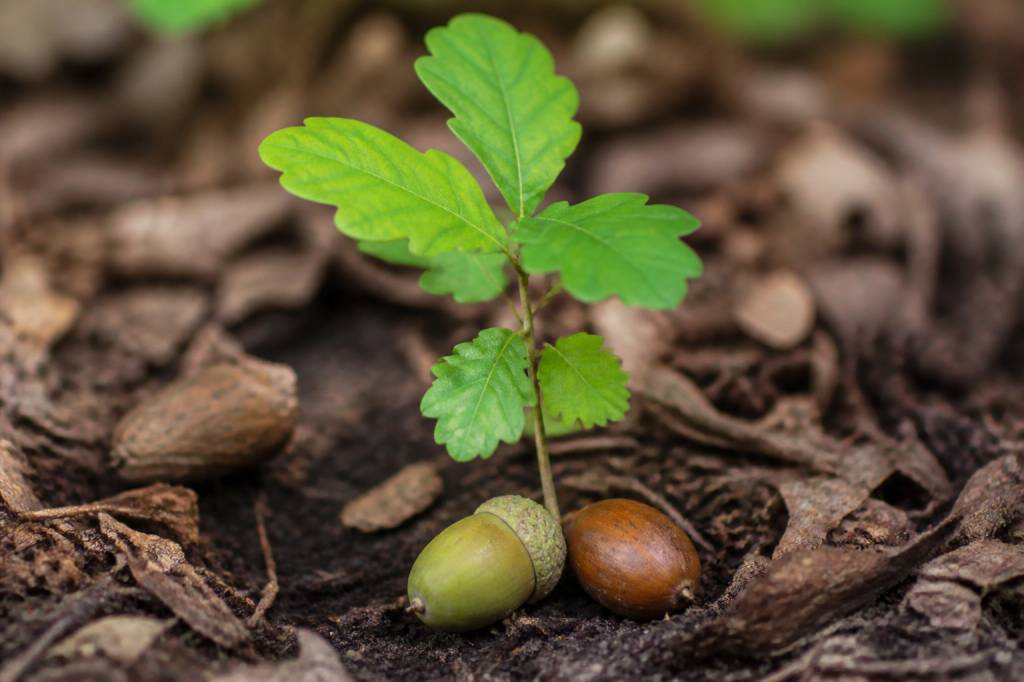
There is something quietly magical about growing an oak from an acorn. In autumn, a small brown cup and its smooth nut may look like little more than a snack for a squirrel, yet inside lies the beginning of a tree that could outlive us all. With patience, a gentle hand and a little protection from hungry wildlife, you can help that tiny seed become a handsome young oak.
Oak trees are wonderfully suited to natural growing methods. They do not need complicated equipment, specialist fertiliser or a heated greenhouse. They simply need a healthy acorn, suitable soil, enough moisture and time. The process is slow compared with growing a salad crop, of course—but that is part of the pleasure. Each new leaf feels like a small promise from the future.
Choose the right acorns
The best time to collect acorns in the UK is usually between September and November, when they have fallen naturally from the tree. Look beneath healthy, mature oaks and collect acorns that are fresh, firm and free from holes, cracks or soft patches.
Look for acorns that still have a warm brown colour and a glossy appearance. Green acorns may not be fully ripe, while blackened or shrivelled ones are often past their best. It is perfectly fine to gather more than you need, as not every acorn will germinate.
Choose a local oak if possible. Native English oak (Quercus robur) and sessile oak (Quercus petraea) are both excellent choices for many British gardens. A local source may also mean the young tree is better adapted to your soil and climate.
Before collecting, make sure you have permission if the tree is growing on private land. In public parks, woodlands and nature reserves, collecting may be restricted. A few acorns from the ground are unlikely to cause harm, but it is always kinder—and wiser—to check first.
Test the acorns gently
Place your collected acorns in a bowl of cool water. Many gardeners use the float test: acorns that sink are often healthy, while those that float may have been damaged by insects or drying out. This is a useful first check, but it is not perfect. Some viable acorns can float because of natural air pockets.
Inspect the floaters before discarding them. If an acorn is firm and looks healthy, you can still plant it. However, throw away any that are hollow, leaking, badly cracked or covered in mould.
Do not leave acorns soaking for days. A short rinse is enough. Once they have been checked, plant them as soon as possible. Unlike many seeds, acorns lose their ability to germinate if they dry out completely.
Decide whether to plant in autumn or spring
There are two simple ways to grow an oak naturally: sow the acorn outdoors in autumn or start it in a container. Both methods can work beautifully, so your choice depends on the space available and how much protection you can offer.
- Autumn sowing: This follows the oak’s natural cycle. The acorn remains in the soil through winter and may begin to root before producing a shoot in spring.
- Container growing: This gives you more control over moisture and protection from mice, squirrels and birds.
- Spring sowing: Acorns stored correctly over winter can be planted in spring, although they usually need a period of cold, damp conditions first.
In the wild, an acorn falls, settles into leaf litter and waits for the right combination of moisture and temperature. Your garden can offer much the same arrangement, with slightly fewer chances of a squirrel carrying the whole project away.
How to sow an acorn outdoors
Choose a spot with good drainage and plenty of daylight. A young oak can tolerate some shade, but it will eventually become a large tree, so think carefully about its future size. Keep it well away from buildings, underground pipes, walls and areas where its roots or spreading branches may later cause difficulties.
Remove weeds and loosen the top layer of soil. Make a small hole roughly 2–3 centimetres deep, place the acorn on its side, and cover it with soil. Planting it sideways allows the emerging root to find its way down naturally, whatever position the acorn happened to land in.
Water the area gently, then cover it with a light layer of fallen leaves. This helps retain moisture and gives the soil a more natural woodland feel. Avoid using a thick, wet layer of material that could encourage rot.
Protection is essential. Cover the planting area with fine chicken wire or sturdy mesh, securing the edges firmly against the ground. Mice, voles, jays and squirrels are all excellent acorn detectives. A small wire cage can also protect the emerging seedling from rabbits and larger animals.
Growing an oak in a container
A deep pot is the safest option if you want to watch the young oak develop before planting it in the ground. Oaks produce a strong taproot early in life, so a shallow seed tray is not suitable. Choose a container at least 20–30 centimetres deep, with generous drainage holes.
Fill the pot with a free-draining mixture. A blend of peat-free multipurpose compost, garden soil and horticultural grit works well. The aim is to hold moisture without becoming waterlogged. Oak seedlings appreciate a natural, earthy growing medium rather than a rich, heavily fertilised mix.
Place one acorn horizontally, about 2–3 centimetres below the surface. Water thoroughly, allowing excess water to drain away. Label the pot with the oak species and sowing date—future you will be grateful, especially if several pots begin to look remarkably similar.
Stand the container outdoors in a sheltered position. An unheated cold frame, covered porch or protected corner of the garden is ideal. The acorn needs exposure to cool winter conditions, but it should not be left in a place where the compost freezes solid for long periods.
Check the compost every week or two. It should feel slightly moist, never saturated and never bone dry. During cold weather, the acorn may appear to be doing nothing. Beneath the surface, however, the first root may already be developing.
Storing acorns for spring planting
If you cannot plant immediately, store the acorns in a cool place for a short period. Put them in a breathable bag or container with slightly damp sand, leaf mould or peat-free compost. Keep them in a refrigerator at around 1–4°C, away from fruit such as apples, which release ethylene gas as they ripen.
Check them regularly for mould or drying. The storage material should be damp to the touch but not wet. If the acorns begin to sprout in storage, plant them carefully without breaking the delicate root.
Many oak acorns need this cold, moist period—known as stratification—to break dormancy. In practice, a British winter often provides the conditions naturally. Do not be tempted to put them in a warm cupboard; an acorn is not waiting for a cosy holiday indoors.
Care for the emerging seedling
Once spring arrives, a small shoot may appear, followed by tender leaves. Keep the seedling in bright light, but protect it from harsh wind and intense midday sun while it is still young. Water when the surface of the compost begins to dry.
Water slowly and deeply rather than sprinkling a little every day. This encourages the roots to travel downwards. Good drainage remains important, as young oaks dislike sitting in stagnant water.
Do not feed the seedling immediately. The acorn contains its own store of nutrients, and a healthy compost should provide enough support during the first season. Excess fertiliser can encourage soft, rapid growth and may damage young roots.
After the first year, a very light spring application of a balanced, slow-release fertiliser may be used if the plant appears pale or growth is weak. In most cases, however, healthy soil, sunlight and consistent watering are more valuable than a generous handful of feed.
Protect the young oak from common problems
The greatest threat to a newly planted acorn is usually not disease—it is wildlife. Squirrels may dig up the seed, birds may carry it away and slugs may nibble tender leaves. A mesh guard gives the seedling a much better chance.
- Use fine mesh around the pot or planting site to discourage rodents.
- Keep grass and weeds away from the stem, as they compete for water and can shelter slugs.
- Check that ties and guards are not rubbing against the young trunk.
- Water during prolonged dry spells, particularly in the first two summers.
- Remove damaged leaves only if they are diseased or completely dead.
Oak seedlings are generally resilient. A few chewed leaves do not spell disaster. Plants have always experienced nibbling, wind and imperfect weather; the goal is not to create a bubble of perfection, but to give your young tree enough support to establish itself.
When to plant the oak in the ground
A container-grown oak is usually ready to plant out after one or two growing seasons, when it has a strong stem and a well-developed root system. Do not leave it in a small pot for too long. Once the roots circle around the container, they may become congested and struggle to grow naturally.
The best planting times are autumn or early spring, when the soil is moist and the tree is dormant. Choose a calm day when the ground is workable and not frozen or waterlogged.
Dig a hole wider than the root ball but no deeper. Place the oak so that the point where the roots meet the stem sits level with the surrounding soil. Planting too deeply can suffocate the roots and encourage problems around the trunk.
Backfill with the excavated soil, firm it gently and water thoroughly. Add a mulch of leaf mould, compost or well-rotted organic matter, keeping it a few centimetres away from the stem. A tree guard or sturdy stake may be useful in exposed gardens, but avoid tying the trunk too tightly.
Give the tree room to grow
An oak is not a small ornamental shrub that will politely remain in its corner. Given time, it can become a broad, powerful tree with a generous canopy and deep roots. Before planting, consider how much space it will need decades from now—not merely how charming it looks beside the shed today.
Avoid planting directly beside houses, patios, drains or boundary walls. If you have a compact garden, an oak may be better suited to a larger plot, community planting project or responsibly managed woodland area. Growing a tree also means thinking about the people, wildlife and buildings that will share its future.
Keep a clear circle around the young trunk during its first few years. Mulch helps conserve moisture, while regular weeding prevents competition. Once established, the oak should become increasingly independent, requiring only occasional care during severe drought or extreme weather.
Enjoy the slow story
Your oak may spend its first year looking modest, perhaps even a little hesitant. That is perfectly normal. Much of its early energy is invested below ground, building the root system that will support future growth.
Take photographs each spring, measure its height once or twice a year and watch for the first new leaves. You may notice insects sheltering among the foliage, birds searching the branches and fungi appearing in the soil. An oak is never just a tree; it gradually becomes a small living neighbourhood.
From one acorn comes shade, shelter, autumn colour and food for wildlife. The process asks for patience, but very little else. Plant the acorn, protect it kindly, and let the seasons do their quiet work. One day, beneath a spreading crown, you may look back and remember the tiny seed that began it all.