


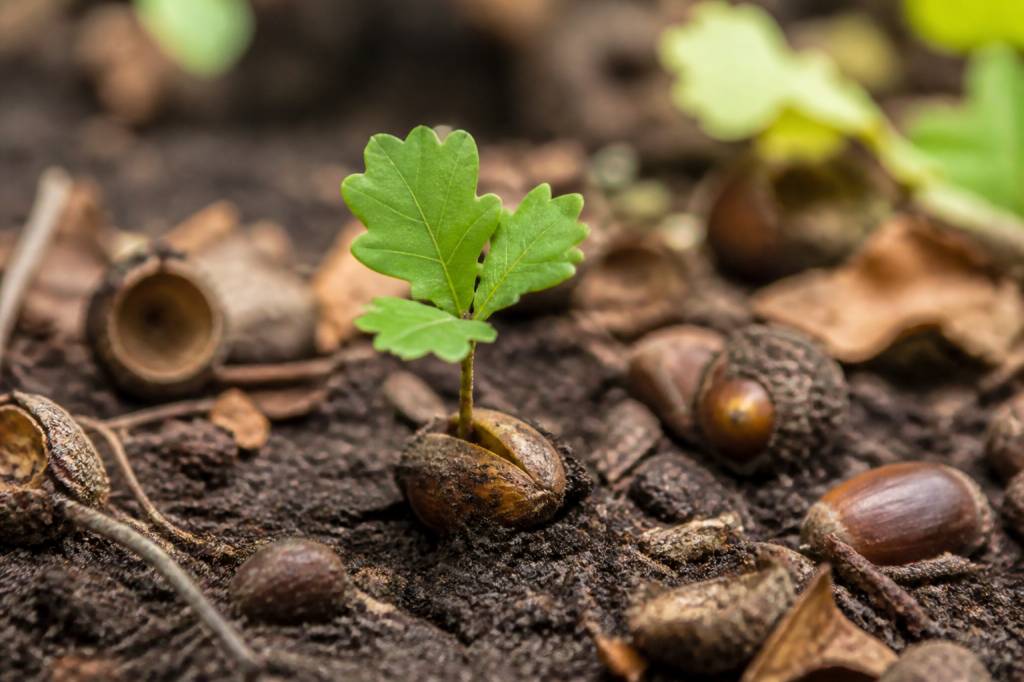
There is something wonderfully hopeful about an acorn. Small enough to hide in your palm, yet carrying the beginnings of a tree that may outlive several generations of gardeners. If you have ever looked at an oak and wondered whether you could grow one yourself, the answer is yes—with a little patience, protection and a willingness to let nature set the pace.
Growing an oak tree from an acorn is one of the simplest and most rewarding gardening projects for autumn. It costs almost nothing, makes a lovely activity for children, and offers a quiet connection to the changing seasons. The first shoots may appear modest, but beneath the soil a strong root is already reaching down, preparing for the long life ahead.
When to collect acorns
In the UK, acorns usually begin to fall between September and November, although the exact timing depends on the weather and the oak species. Look beneath healthy, mature trees rather than gathering from busy roadsides or areas where the tree may have been treated with chemicals.
The best acorns are recently fallen, plump and undamaged. They should have a firm shell with no visible holes, cracks or soft patches. Green acorns are generally immature, while very dark, shrivelled ones may have dried out or started to decay.
Choose a dry day if possible. Collecting from the ground is preferable to pulling acorns from branches, as naturally fallen nuts are more likely to be mature. You might even notice that local wildlife has already selected the finest specimens—squirrels are excellent, if somewhat competitive, gardening assistants.
How to choose healthy acorns
Once you have gathered your acorns, inspect them carefully. A little sorting at this stage can greatly improve your chances of success.
- Choose acorns that feel heavy for their size.
- Avoid any with small round holes, which may indicate weevil damage.
- Discard acorns that are cracked, mouldy or unusually soft.
- Keep several more than you think you need, as not every acorn will germinate.
You can also place the acorns in a bowl of water for a simple first test. Those that sink are often viable, while floating acorns may be hollow or damaged. However, this test is not perfect, so do not throw away every floating acorn without checking it. Some healthy acorns can float because of trapped air or differences in their shell.
After the water test, remove the acorns and allow them to dry for only a short time. They should not be left on a sunny windowsill or beside a radiator, as excessive drying can reduce their ability to grow.
Do acorns need cold treatment?
Many British oak acorns benefit from a period of cold, moist conditions known as stratification. This mimics the natural winter they would experience outdoors and helps break dormancy.
If you collect acorns in autumn and plant them outside straight away, nature will usually provide this cold period for you. If you prefer to start them indoors, place the acorns in a sealable bag or container with slightly damp compost, sand or kitchen paper. Keep them in the refrigerator for around four to twelve weeks.
Check them every week or two. The material should remain moist but never wet, and any mouldy acorns should be removed promptly. If a root begins to emerge, handle the acorn very gently. That tiny root is surprisingly delicate and will become the tree’s main anchor.
Do not store acorns in a warm, dry cupboard for months. Unlike many seeds, fresh oak acorns do not usually appreciate prolonged drying. They are best planted in autumn or kept cool and moist until you are ready to sow them.
Planting acorns outdoors
The most natural method is to plant your acorns directly into the ground in autumn. Choose a place with plenty of room, good drainage and enough sunlight. An oak may look small and polite in its first few years, but it is planning a much grander future.
Loosen the soil to a depth of around 15 to 20 centimetres and remove large stones or compacted clumps. Plant each acorn on its side or with the pointed end facing down, approximately 2 to 3 centimetres below the surface. There is no need to bury it deeply; a young shoot needs to reach the light without unnecessary effort.
Leave around 30 centimetres between acorns if you are growing them temporarily before transplanting. If you are planting in their permanent position, allow considerably more space. A mature oak can develop a broad canopy and extensive roots, so keep it well away from buildings, drains, walls, patios and underground services.
Water the area after planting, then cover the soil with a light layer of leaf mould or compost. Avoid creating a thick, wet blanket, as this can encourage rot. A simple wire mesh guard pressed firmly into the soil will help protect the acorns from squirrels, mice and birds.
Growing an oak tree in a pot
Starting an oak in a container gives you more control and makes it easier to protect the young plant. Choose a deep pot with drainage holes, as oak seedlings send down a strong taproot. A tall tree-planting pot is much better than a shallow decorative container.
Fill the pot with a free-draining peat-free compost. You can mix in a little horticultural grit or perlite if the compost feels heavy. Place one acorn in each pot, about 2 to 3 centimetres deep, and water thoroughly.
Set the pots outdoors in a sheltered position. Oak acorns need natural seasonal conditions, and a cold greenhouse, covered porch or protected corner of the garden can work well. Keep the compost lightly moist, especially during dry spells, but never allow the pot to sit in a saucer of water.
If squirrels are a problem, cover the pots with chicken wire or a fine mesh. A determined squirrel can locate a freshly planted acorn with astonishing accuracy. It may have no interest in your carefully labelled bulbs, but it will remember the oak seedling.
What happens as the acorn grows?
The first visible sign of growth is often a pale root emerging from the acorn. This may appear before any green shoot, and it can look rather unpromising at first. Resist the temptation to dig it up for a closer look. The root is doing important work below the surface.
After the root establishes itself, a slender shoot will push upwards. Depending on temperature and growing conditions, this may happen in late winter or spring. The first leaves may be small and simple, but they will gradually develop the familiar lobed shape associated with oak.
Place potted seedlings somewhere bright, with gentle sunlight and good air circulation. Young oaks do not need pampering indoors. In fact, a warm room can encourage weak, premature growth. They are woodland-born but not houseplants, so cool outdoor conditions are usually more suitable.
Watering and feeding young oak trees
During the first growing season, water your oak whenever the top of the compost or soil begins to dry. Deep, occasional watering is more useful than a daily splash, as it encourages the roots to grow downwards.
Newly planted trees are particularly vulnerable during long periods of dry weather. Water slowly around the base, allowing moisture to reach the root zone. A mulch of leaf mould or well-rotted garden compost can help retain moisture, but keep it a few centimetres away from the stem.
Oak seedlings rarely need fertiliser during their first year. A good, free-draining soil is usually enough. Too much nitrogen can produce soft, leafy growth that is less resilient. If the tree remains in a pot for more than one season, a light application of balanced, slow-release fertiliser in spring may be helpful, following the product instructions carefully.
Protecting the young tree
Wildlife is the greatest challenge for many oak seedlings. Squirrels, mice, pigeons and deer may all nibble, dig or disturb a young plant. A sturdy tree guard or wire mesh is often essential, particularly in an open garden.
Check guards regularly to ensure they are not rubbing against the stem or becoming too tight as the tree grows. Remove weeds from around the base, but avoid digging deeply near the seedling. Oak roots can be damaged easily while they are still developing.
Keep an eye out for common problems such as mildew, leaf spots or sudden wilting. A few blemished leaves are not necessarily a concern. Young trees may experience minor damage and recover perfectly well. Good airflow, sensible watering and avoiding overcrowding will prevent many issues before they become serious.
When to transplant an oak seedling
If you have grown your oak in a pot, transplant it while it is still young. The ideal time is usually late autumn or early spring, when the tree is dormant and the soil is workable.
Before planting, select the final position carefully. Ask yourself how large the tree could become, not how large it is today. A sunny or lightly shaded site with deep, well-drained soil is ideal. Avoid waterlogged ground and locations where the mature roots or branches could cause problems.
Water the pot well before planting. Remove the seedling carefully, keeping as much of the root ball intact as possible. Place it at the same depth as it was growing in the pot, with the root collar level with the surrounding soil. Backfill gently, firm the ground with your hands and water thoroughly.
A stake may be useful in an exposed garden, but do not tie the tree so tightly that it cannot move at all. Gentle movement helps the trunk develop strength. Use a soft tree tie and check it each year.
How long does an oak tree take to grow?
Oak trees are famously patient. Your seedling may grow only a little during its first year while it concentrates on its roots. This is entirely normal. With suitable conditions, it will gradually become taller and sturdier, but it will take many years to develop into a substantial tree.
The first acorns may not appear for several decades, depending on the species and growing conditions. That may sound like a long wait, but planting an oak is rarely about immediate results. It is an act of gardening for the future—a gift to birds, insects, mammals and people you may never meet.
Keep a simple record of the tree’s planting date and location. Children often enjoy measuring its height each spring, while older gardeners may appreciate watching the changing bark and branching pattern. These small observations turn a single acorn into a living seasonal diary.
A few thoughtful oak-growing tips
- Collect only a modest number of acorns, leaving plenty for wildlife.
- Never collect from protected land without permission.
- Choose locally native oak species where possible.
- Plant several acorns, because germination rates can vary.
- Use deep containers rather than shallow pots.
- Protect young seedlings from squirrels, deer and drying winds.
- Give the mature tree plenty of space from the beginning.
Growing an oak from an acorn is a gentle reminder that the most impressive garden projects often begin with the smallest gestures. A handful of fallen seeds, a pot of compost and a little attention can set a tree on its way. Then, season by season, you simply watch, water and wait—perhaps with a cup of tea nearby, while the future quietly takes root.