


Few garden trees bring quite the same quiet magic as an acer. In spring, its delicate leaves unfurl like little painted fans; in summer, they create a cool, graceful canopy; and in autumn, the whole tree can glow with shades of amber, copper, scarlet and plum. It is easy to understand why acers have found a special place in so many British gardens.
Yet these elegant trees can sometimes appear rather troubled. Brown leaf edges, sudden leaf drop, sticky foliage or a disappointing lack of colour may leave you wondering what went wrong. The reassuring news is that most acer problems have a simple explanation, and many can be managed with gentle, natural care.
Let us look at the most common acer problems, how to recognise them and the kindest ways to help your tree recover.
Getting to know your acer
Before treating a problem, it helps to understand the tree in front of you. Acers, particularly Japanese maples (Acer palmatum), are often more delicate than larger native trees. Their fine leaves and shallow root systems make them sensitive to sudden changes in moisture, temperature and sunlight.
Most acers prefer:
- Moist but well-drained soil
- A sheltered position away from strong winds
- Morning sun or dappled shade
- Protection from harsh afternoon sunlight
- A slightly acidic to neutral soil
- A layer of organic mulch around the roots
Different varieties have different needs. A green-leaved acer will usually tolerate more sun than a delicate purple or finely dissected variety. The best place to begin is always the plant label, followed by a careful look at the conditions in your garden.
Brown and crispy leaves
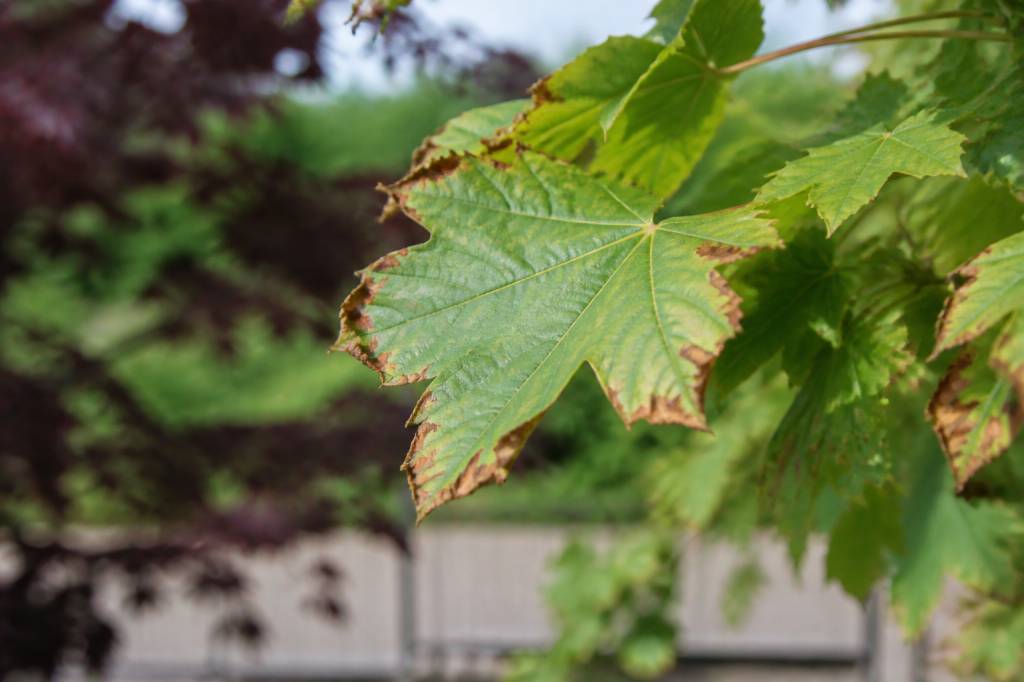
Brown leaf tips or scorched patches are among the most common acer complaints. The leaves may look as though they have been singed, especially around the edges. This is often called leaf scorch.
Leaf scorch usually appears when the tree loses water faster than its roots can replace it. Dry weather, strong winds, intense sunlight and restricted roots can all play a part. Newly planted acers are particularly vulnerable while they are establishing themselves.
Other possible causes include:
- Dry soil during warm weather
- Cold, drying winds
- Too much direct afternoon sun
- Roots disturbed during planting
- Excess fertiliser around the root zone
- Waterlogged soil damaged by poor drainage
To help a scorched acer, water it slowly and deeply during dry spells. Pour water close to the base of the tree so that it reaches the root area rather than simply running across the surface. A generous layer of composted bark, leaf mould or well-rotted garden compost will help the soil retain moisture.
Keep mulch a few centimetres away from the trunk itself. Mulch touching the bark can create a damp hiding place for fungal problems and pests. Brown leaves will not turn green again, but fresh growth should look healthier once the cause has been corrected.
Leaves turning green or losing their colour
Perhaps you chose an acer for its rich burgundy leaves, only to find that new growth is appearing green. Or maybe the beautiful autumn colour seems rather muted this year. Before reaching for a fertiliser, take a moment to consider light levels.
Many purple-leaved acers become greener when they do not receive enough light. They can still grow perfectly well, but their characteristic colour may be less intense. On the other hand, too much strong sunlight can scorch the leaves and cause the tree to produce stressed, pale growth.
Healthy colour depends on balance. A position with bright morning light and light afternoon shade is often ideal. Nearby buildings, fences or vigorous shrubs may gradually alter the amount of light reaching your acer, so a location that was once suitable may become less so over time.
Autumn colour is also influenced by the weather. Cool nights and sunny days encourage vibrant reds and oranges, while a mild, wet autumn may produce less dramatic shades. Nature does not always follow the garden calendar perfectly, and even acers have their quieter seasons.
Wilting leaves despite damp soil
Wilting can be confusing. You water the tree, yet the leaves still droop. In this situation, the problem may not be a lack of water but too much of it.
Acers dislike sitting in waterlogged soil. Their roots need air as well as moisture, and prolonged saturation can cause them to weaken or rot. Heavy clay, compacted ground and blocked drainage are common causes.
Check the soil by pushing a finger or small trowel into the ground near, but not directly against, the trunk. If it feels soggy several centimetres below the surface, reduce watering and investigate the drainage. A container-grown acer should always have drainage holes, and the pot should not stand permanently in a saucer filled with water.
If planting a new acer in heavy soil, improve the area with organic matter and consider raising the planting position slightly. Do not bury the root flare, where the trunk begins to widen into the roots. Planting too deeply can suffocate the roots and encourage decay.
Leaves dropping at the wrong time
Some leaf drop is perfectly natural. Acers are deciduous, so they will shed their leaves in autumn before entering winter dormancy. A tree may also lose a few older leaves after being planted or moved, as it adjusts to its new surroundings.
Unexpected leaf drop in spring or summer can indicate stress. Drought, heat, wind, root disturbance and waterlogged soil are all possible causes. Sudden changes in temperature may also cause leaves to fall, particularly after a late frost.
Look closely at the remaining leaves and branches. Are the buds still firm? Are the stems flexible and alive beneath the bark? Scratch a very small area of young bark with your fingernail. Green tissue underneath suggests the branch is still living, while dry brown tissue may indicate dieback.
Remove only branches that are clearly dead, cutting back to healthy wood with clean, sharp secateurs. Avoid heavy pruning while the tree is stressed. An acer rarely needs dramatic shaping, and excessive cutting can create more problems than it solves.
Wind damage and frost
An acer in an exposed position can look tired even when pests and diseases are not involved. Large leaves catch the wind, while fine branches may bend or break. Cold winds can also draw moisture from the foliage, causing brown edges and premature leaf fall.
Young trees benefit from a sheltered position behind a fence, hedge or larger shrub. However, avoid planting too close to a wall where reflected heat can cause summer stress. A little protection is helpful; complete confinement is not.
Late spring frosts can blacken tender new leaves overnight. It is an alarming sight, but the tree often recovers by producing a second flush of growth. If frost is forecast, cover smaller acers with horticultural fleece in the evening and remove it during the day so that air can circulate.
Do not rush to remove frost-damaged leaves. They may offer some protection to the buds beneath them. Wait until the risk of further frost has passed, then tidy away leaves that are completely dead.
Aphids and other sap-sucking pests
Aphids are small, soft-bodied insects that may gather on young shoots and the undersides of leaves. They feed on plant sap and can cause curling, distortion and sticky patches known as honeydew.
Honeydew may attract ants and encourage the growth of sooty mould, a dark coating that makes leaves look dusty or dirty. Although it is unattractive, sooty mould usually grows on the sugary substance rather than attacking the leaf directly.
For a light infestation, encourage natural predators. Ladybirds, lacewings, hoverfly larvae and small birds are valuable allies in the garden. A gentle spray of water can also dislodge aphids from tender growth. Repeat this every few days if necessary, taking care not to damage the leaves.
Try to avoid broad-spectrum insecticides. They can harm beneficial insects as well as the pests you are trying to manage. If an infestation is severe, use a mild, plant-friendly soap spray according to the product instructions, and test it on a small area first.
Ants often protect aphids because they collect honeydew. Reducing aphid numbers and keeping branches from touching other plants can help interrupt this little partnership. The ants may be industrious, but they are not always helping your acer.
Scale insects and sticky leaves
Scale insects look like tiny brown, white or waxy bumps attached to stems and leaves. They feed on sap and may weaken the tree over time. Sticky honeydew, yellowing leaves and sooty mould are common signs.
Inspect branches carefully in late winter or early spring, when the tree is bare. A small number of scales can often be removed by hand with a soft brush or cloth. Prune out heavily infested twigs and place them in the household waste rather than the compost heap.
For larger infestations, a horticultural oil used during the dormant season can smother overwintering pests. Always follow the label carefully, avoid applying products in freezing or very hot weather, and check that the treatment is suitable for acers.
Fungal diseases and dieback
Discoloured leaves do not always mean disease, but fungal problems should be considered when branches die back, leaves develop unusual spots or the tree declines steadily.
Verticillium wilt is a soil-borne disease that can affect maples. Symptoms may include sudden wilting, yellowing leaves and dieback on one side of the tree. Unfortunately, there is no simple natural cure once the disease is established. Remove affected branches promptly and seek advice from a qualified arborist or plant health specialist.
Other fungal problems are encouraged by poor air circulation, wet foliage and damaged bark. Good garden hygiene makes a meaningful difference:
- Remove fallen, diseased leaves from beneath the tree
- Water the soil rather than spraying the foliage
- Prune on a dry day using clean tools
- Do not compost severely diseased material
- Avoid damaging the trunk with mowers or strimmers
- Give the tree enough space for air to move around it
If you are unsure whether a branch is diseased or simply dormant, take a clear photograph and ask a local nursery, garden centre or tree specialist for advice before making large cuts.
Pruning an acer gently
Acers are often at their most beautiful when allowed to develop naturally. Their branching structure is part of their charm, so pruning should be light and purposeful.
Remove dead, damaged or crossing branches first. Thin congested growth only when necessary, and take care not to remove more than a modest portion of the canopy in one year. Late summer is often a suitable time for pruning many acers because the sap is less likely to bleed heavily than in early spring.
Use sharp, clean secateurs and make neat cuts just outside the branch collar. Avoid leaving long stubs, but do not cut flush against the trunk. A small, well-placed cut heals more easily than a large wound.
Feeding without overdoing it
A healthy acer in good soil usually needs surprisingly little feeding. Too much nitrogen can produce soft, rapid growth that is more vulnerable to pests, frost and wind. It may also encourage leaves at the expense of the graceful form you were hoping for.
In spring, spread a thin layer of homemade compost, leaf mould or well-rotted manure over the soil surface. This gently improves soil structure and releases nutrients slowly. If your tree is showing clear signs of nutrient deficiency, such as general yellowing between green veins, test the soil before adding fertiliser.
Do not use lime around an acer unless a soil test specifically recommends it. Many varieties are happiest in slightly acidic conditions, and raising the soil pH unnecessarily can make nutrients harder for the roots to absorb.
A simple seasonal care routine
Small, regular observations are often more useful than dramatic interventions. During spring, watch new shoots for aphids and protect tender foliage from late frosts. In summer, check the soil moisture twice a week during dry weather and water deeply when needed.
In autumn, enjoy the changing colours while clearing diseased leaves from the base. Apply a fresh layer of mulch once the ground has cooled. In winter, inspect the branches for damage and make sure containers are not sitting in water.
Take a quiet walk past your acer every few days. Look at the leaves, touch the soil and notice whether the tree is growing evenly. This simple habit helps you spot changes before they become serious. Gardening is often less about rushing in with a remedy and more about learning the gentle language of plants.
With the right position, steady moisture and a little patience, most acers reward their gardener generously. Even a tree that has suffered a difficult season can return with fresh leaves, elegant branches and that familiar feeling of having brought a small piece of woodland beauty into the garden.