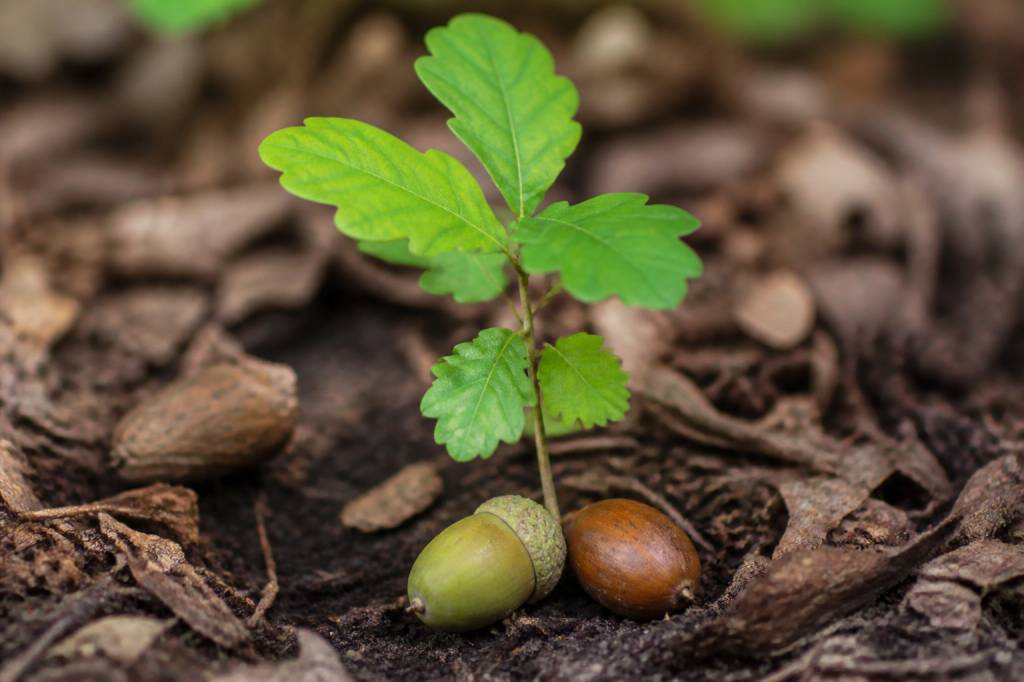
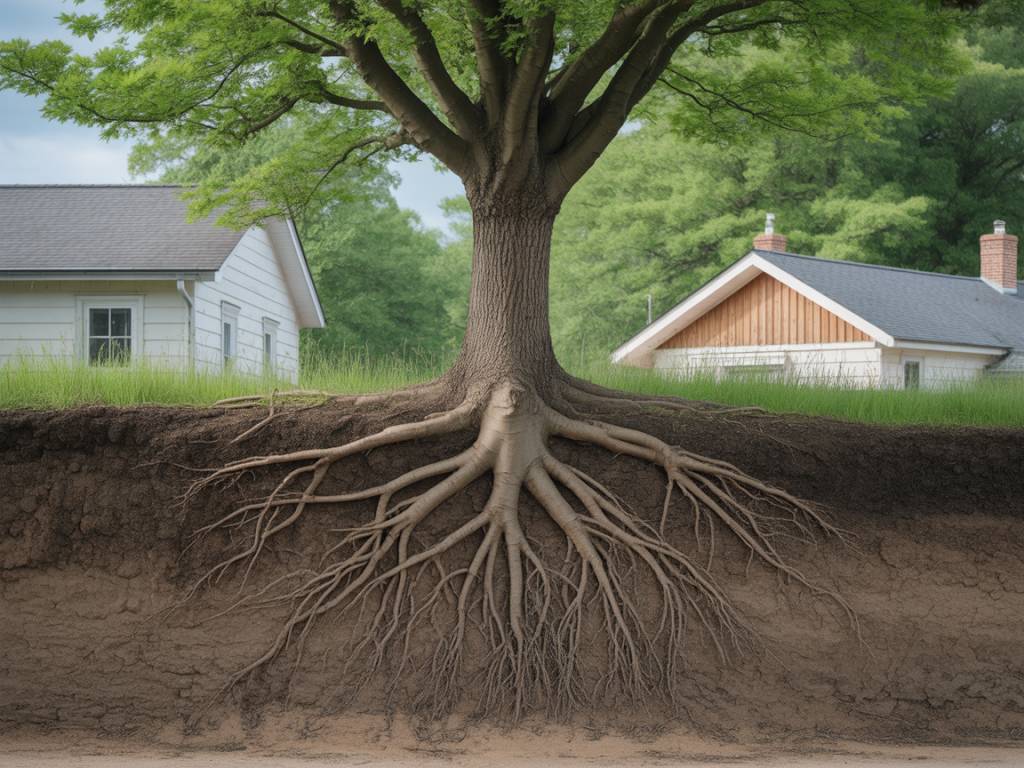
When you stand under a mature tree and feel the weight of its branches stretching towards the sky, it’s easy to imagine its roots plunging just as deeply into the earth. Many people picture roots like a mirror-image of the canopy, drilling straight down towards the centre of the planet — especially when that tree is growing close to the house.
But the real story of tree roots is quite different… and, in most cases, far less frightening.
Let’s wander gently beneath the soil surface together and see how deep roots really grow, and what that means if you’re planting trees near your home, patio or garden walls.
How deep do tree roots really grow?
For most garden trees, the vast majority of roots live surprisingly close to the surface.
Studies in arboriculture show that around 80–90% of a tree’s roots are found in the top 60 cm (about 2 feet) of soil. Many fine feeder roots – the ones that actually gather most of the water and nutrients – are even shallower, often in the top 30 cm.
Deep roots, the ones that really dive down into the ground, do exist, but they’re usually:
- Fewer in number
- Much thinner than you might expect
- More about searching for moisture or anchoring the tree than rampaging under your foundations
So instead of an upside-down Christmas tree shape, picture something more like a flat, spreading plate of roots, reaching well out beyond the canopy but mostly staying in the upper layers of soil, where air, water and nutrients are richest.
The myth of “roots as deep as the tree is tall”
You’ve probably heard the old saying that tree roots go as deep as the tree is tall. It’s a romantic idea, but nature doesn’t work that way.
Roots need oxygen as well as water. In most garden soils, oxygen levels drop quickly as you go deeper, so roots simply don’t bother plunging into lifeless subsoil unless they have to.
There are a few exceptions – some trees can send a taproot deeper if the soil is very light, free-draining and uncompacted, or if they’re desperate to find a lower water table. But even then, the root system remains mostly shallow and wide rather than dramatically deep.
So if you’ve been lying awake at night, imagining a willow root drilling 10 metres straight down beneath your sitting room… you can breathe a little easier.
What really shapes how deep roots go?
Like most things in the garden, root depth is a dance between the tree and its environment. Several factors gently nudge roots to stay shallow or tempt them a little deeper.
Here are the main influences:
- Soil type – Heavy clay soils often keep roots shallower, spreading wide across that denser layer. Sandy or loamy soils may allow roots to penetrate a little deeper, especially if they’re moist but free-draining.
- Water availability – If there’s regular moisture near the surface (rain, mulching, light watering), roots happily stay shallow. In drier climates or very well-drained areas, roots may go deeper in search of water.
- Compaction – Compacted soil (for example under car parks, paths, or where builders’ rubble was left) reduces oxygen and makes it physically hard for roots to enter. Roots tend to skirt around compacted layers instead of going straight down.
- Species – Some trees are naturally shallow-rooted and spreading; others have stronger anchoring roots that may go a bit deeper. But even “deep-rooted” trees usually keep most of their roots near the surface.
- Water table – If groundwater sits high in the soil profile, roots may avoid that saturated layer and stay near the surface where the balance of water and oxygen is better.
In a typical UK garden, especially one with a mix of loam and clay, you can safely assume that most roots will occupy the top 60–90 cm of soil, and spread outwards rather than downwards.
How far do roots spread horizontally?
This is the part that usually surprises people most: roots often spread far further sideways than the canopy reaches.
A common rule of thumb is that roots may spread 1.5 to 3 times the radius of the canopy, and sometimes more in open soil. In other words, if the branches of a tree reach 4 metres from the trunk, the roots may quietly explore 6 metres or more outwards under the lawn.
However, these far-flung roots are usually very small, fine and not particularly strong. They don’t behave like giant tentacles lifting patios in the night. Most structural, anchoring roots are closer to the trunk, often within a radius of 1–2 times the trunk’s height from the ground up.
Think of the root system as a fading watercolour: dense and strong near the trunk, growing finer and more delicate as it stretches away.
Do roots really damage house foundations?
This is the heart of most worries. A beloved tree near the house can bring both beauty and anxiety. Can its roots crack your walls? Will it undermine your foundations over time?
The honest answer: sometimes, under the right (or wrong) conditions – but not usually in the way people imagine.
Roots don’t actively “attack” solid foundations. They don’t have the power to drill through concrete like a slow-motion horror film. Instead, problems tend to fall into two main categories:
- Existing weaknesses and gaps
Roots are opportunists. If they find a crack, poorly made joint, or broken drain with moisture seeping out, they may wiggle in and slowly widen it as they grow. They follow the water, not the house. - Soil movement, especially in clay
In shrinkable clay soils, certain thirsty trees can increase drying in summer, causing the clay to shrink and subside slightly. In very dry years, this can lead to movement in shallow foundations, particularly in older houses. Later, when the clay swells again, further movement can occur.
In more stable, non-shrinkable soils, tree roots near houses rarely cause serious damage. Minor issues are more often seen in lighter structures such as paths, patios, old garden walls and drives, where shallow roots can gently lift or crack surfaces over time.
If you live in an area known for clay heave and subsidence, or if you’ve already had movement issues, it’s wise to be more cautious and seek local professional advice before planting large trees close to your home.
Safe planting distances: how close is too close?
There is no single magic number that applies to every tree and every house, but gardeners and arborists use some helpful guidelines to reduce risk.
When you’re thinking of planting a tree near your home, consider:
- Tree size at maturity – A small ornamental tree is a very different neighbour from a full-sized oak.
- Soil type – Clay demands more caution than free-draining sandy or loamy soils.
- Age and depth of your foundations – Older properties with shallow foundations are more vulnerable.
Very broadly (and kindly note, this is guidance, not a guarantee), you might consider these rough minimum distances from the house for planting:
- Small trees (up to 5–6 m high at maturity, e.g. many ornamental cherries, amelanchier, smaller crab apples): around 2–3 m away from the house.
- Medium trees (6–12 m high, e.g. rowan, smaller birches, some ornamental pears): 4–6 m away.
- Large trees (over 12 m high, e.g. oak, beech, willow, poplar, large conifers): 10 m or more, especially on clay soils.
If you are on shrinkable clay and considering a very thirsty species such as willow, poplar or eucalyptus, it’s often best to keep them well away from the house altogether, or to choose a different tree.
Tree species that deserve extra care near buildings
Some trees are more likely to cause difficulties near structures, usually because they have vigorous, far-reaching root systems and high water demand.
Species to handle with particular care near houses, drains and light structures include:
- Willows (Salix spp.)
- Poplars (Populus spp.)
- Eucalyptus
- Large conifers such as Leyland cypress (Cuprocyparis leylandii)
- Horse chestnut
These trees can be magnificent in the right place – a field boundary, a large garden far from buildings, or as part of a wider landscape. But snug up against a semi-detached in suburbia, they can be rather over-enthusiastic companions.
By contrast, many smaller ornamental trees make excellent near-house planting choices:
- Amelanchier (Juneberry)
- Small crab apples (Malus varieties)
- Rowan (Sorbus aucuparia and smaller cultivars)
- Hawthorn (in modest forms)
- Smaller Japanese maples (Acer palmatum varieties, away from strong wind)
These tend to have more modest root systems, often compatible with planting within a few metres of the house, provided other conditions are sensible.
What about drains, patios and garden walls?
Even if your house foundations are sound, you might still worry about roots disturbing the rest of your hard landscaping.
Here’s how roots typically interact with these features:
- Drains
Roots don’t break into intact, modern plastic drains. But they can exploit cracks, loose joints or old clay pipes where water is already escaping. If you have an older property and mature trees, regular drain inspections can give peace of mind. - Patios and paths
Because most roots are shallow, they can sometimes lift paving, especially where slabs are laid directly on soil or light sand, or if the ground was poorly compacted. Good groundwork, proper sub-bases and flexible joints help a great deal. - Garden walls
Light, shallow-footed walls are more vulnerable than properly built, well-founded masonry. Roots won’t usually knock a solid wall over, but they can nudge at weaker sections or those already leaning.
If you’re laying a new patio or path near an existing tree, think of it as working with the roots rather than against them. Leaving a generous unpaved area around the trunk, using permeable surfaces where possible, and avoiding heavy cutting of major roots will keep both your tree and your paving happier in the long run.
Planting near your home: a gentle step-by-step approach
When you fall in love with a tree at the nursery, it’s tempting to imagine it straight away by the front door, framing your windows with blossom. A little planning now can save heartache later.
Before planting near your house, try this calm, practical checklist:
- Check the mature size
Look at the estimated eventual height and spread on the label, not just the size in the pot. Imagine that size against your house, not your current garden. - Discover your soil type
Is it clay, loam, or sandy? Does it crack and shrink in summer, or stay stable? A simple soil test or a quiet chat with neighbours can be revealing. - Look at local precedent
What trees are thriving (or causing problems) on your street? Do nearby homes show signs of movement or long-standing cracks? - Decide your minimum distance
Based on the tree’s size and your soil, set a line you won’t cross – a personal “root respect” zone. - Plan for light and views
Think about where the shade will fall in summer and winter, and whether roots will compete with existing beds or lawns.
A tree planted just a metre or two further out from the wall can still frame your home beautifully, while giving your foundations and services more space to breathe.
Managing existing trees near houses
Perhaps the tree is already there – older than your ownership of the house, and maybe older than the house itself. You love it, but you’re unsure.
In that situation, a sensitive approach is best:
- Have the tree assessed
A qualified arborist can examine both the tree’s health and any potential risk to buildings. They’ll consider species, size, condition, soil and proximity. - Avoid drastic DIY pruning
Heavy, sudden pruning can make a tree unstable, stressed or more prone to decay. It can also increase water demand in the regrowth. Gentle, well-timed pruning by a professional is kinder and safer. - Monitor for changes
Keep an occasional eye on cracks in walls, sticking doors, or lifting patios. Many small cracks are simply age-related and harmless, but if something changes quickly, it’s worth investigating. - Take your time with big decisions
Removing a mature tree can alter soil moisture and light dramatically, sometimes even increasing movement in clay soils. Major changes are best done thoughtfully, with expert guidance.
A well-managed tree can live harmoniously close to a house for decades, offering shade, birdsong and quiet company through the seasons.
How to encourage roots to behave well
We can’t tell roots exactly where to go, but we can gently shape their preferences through good gardening habits.
- Mulch well
A generous ring of organic mulch (kept a little away from the trunk) encourages a healthy, fibrous root system near the soil surface, where it can easily access water and nutrients, instead of diving for survival. - Water wisely in dry spells
For younger trees, deep, infrequent watering encourages roots to spread broadly rather than clustering at a single drip line or pipe leak. - Avoid heavy compaction
Try not to park cars or store heavy materials near the base of trees. Roots need air spaces in the soil; compaction can force them closer to the surface or away from your preferred direction. - Give trees their own space
Leaving a “root zone” free of hard landscaping and deep digging around the trunk reduces the chances of future conflicts with paths and patios.
With a little care, roots become quiet allies, stabilising your soil, recycling nutrients and supporting the life of your garden from below.
Living peacefully with trees near your home
When we understand how roots really behave – wider rather than wildly deep, searching rather than attacking – our relationship with trees near the house can soften.
Yes, we should show respect: choosing appropriate species, giving them breathing room, and being mindful of soil type and building age. But we don’t need to fear an underground monster every time we plant a sapling within sight of a brick wall.
A thoughtful planting distance, the right choice of tree, and occasional professional advice where needed can allow you to enjoy blossom at the bedroom window, dappled shade over the patio, and the gentle rustle of leaves by your living room – all without losing sleep over what’s happening beneath your feet.
In the quiet space between your house and your garden, roots and walls can coexist, each doing their work in their own element: stone holding firm above, and roots weaving life below.